One of Them Started Singing
Blue OP’s, cuffed at the ankle. OP stood for Ocean Pacific…commonly depicted with an image of a fella on a surfboard, riding a wave. Exactly the pants one would expect a 15-year-old boy to wear in December in Niagara Falls, NY, with six inches of snow on the ground. The accompanying T-shirt was also OP. Footwear? Boat shoes, of course, on which the salt from the street left a white film around their sides. The 15-year-old…that was me.

I was dressed to surf in the middle of a blizzard – walking into my Global Studies class that took place in the classroom at the end of the hall on the second floor. The floors were dusty, and boat shoes weren’t renowned for their traction. I could run and glide – a feat made easier by my unpreparedness. I’d hide my book in the classroom, so I didn’t have to carry it around. I had no intention of reading it. And, I was supposed to have colored pencils to shade in maps of places I could not locate on a globe – and would never visit in my life. I just borrowed those.
Our desks were arranged in fours – in a makeshift circle so we could face each other. One day each week was for geography and map coloring, and another was for reading the newspapers delivered to the room for current events. On two of the days, we’d either watch a movie or sit in silence to write our answers to the questions at the end of each section of the book. Then there was a weekly test to see how much we had remembered at the end of the week. That was Honors Global Studies in the Niagara Falls City Schools.
So, if you asked me what the Western Front was in World War I, or where it was located – all that I could tell you at that time was that I colored it purple. I’d have chosen blue – my favorite color – but blue was reserved for lakes, rivers, and the oceans. Later in life, I’d find myself teaching social studies to a unique group of high schoolers – many of whom could become physically violent absent notice, and with seemingly little reason. The bosses told us that a great way to reduce that risk in our classrooms was to keep our classes interesting. The rambunctious kids I taught got into less trouble when their minds were otherwise occupied. And guess what I had to teach…yup…The Western Front.
I learned early on in teaching that my students responded well to listening to stories – interesting ones, activity-based learning, and anything that involved movement or music. I’d have needed a bouncer in my classroom if I’d gone the read-the-chapter-and-answer-the-questions route. Google wasn’t a thing yet. AI – decades from existence. But the Niagara Falls Library – it was like the Taj Mahal – huge. Floors of books, reference materials, periodicals, and microfiche. I just asked my son what he thinks microfiche is. He said it was on the menu at the Asian Gourmet – a place in Concord we frequented until it became a Dunkin.
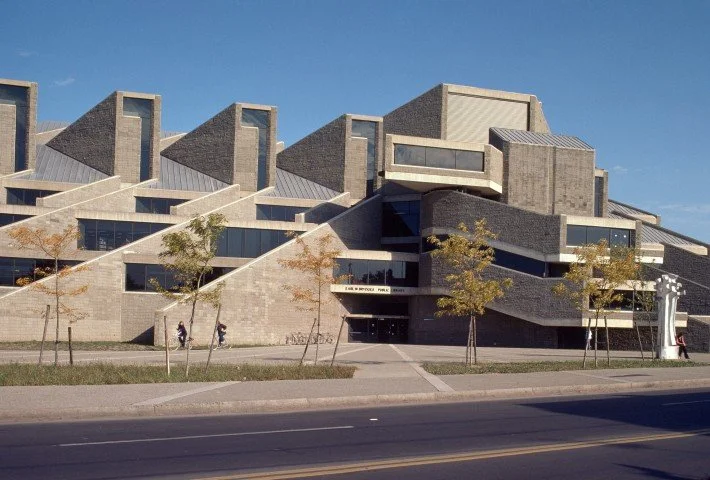
The Taj Mahal in Niagara Falls, NY
It was interesting to me – the stories I could find at that library. I came across one that I’ve thought about every single Christmas since I read about it. And, I get to tell it once more here. The US didn’t get into World War I until 1917 – but the fighting had begun long before that. And the “Western Front” wasn’t like our Alamo – one small place where a serious fight went down. Less than 1,000 were killed at the Alamo. Something like 7 million were killed on the Western Front.
So the story is this – On Christmas Eve 1914, England, France, and Germany were going at it in Trench Warfare. No Man's Land sat between the trenches. Each side would take turns venturing out there – attempting to get to the other’s side – only to be shot or blown to bits. The fighting was up close and personal. No Stealth Bombers, no drones. Bullets, bayonets, and grenades – as far as they can be thrown by your guy with the strongest. It must have been horrifying.
But on December 24, 1914, one of the combatants hiding in his trench started singing. Then some of the others joined in. Soon, enough voices were singing Christmas Carols that could be heard in the trenches on the other side of the field. And a few of those warriors rested their guns and joined in the sing-along. And within no time at all, the shooting stopped – and an unwritten treaty took shape. A couple of the soldiers had the guts to leave their trench to head into No Man’s Land. It was a good time to sneak out to snag the corpses of their fallen friends.
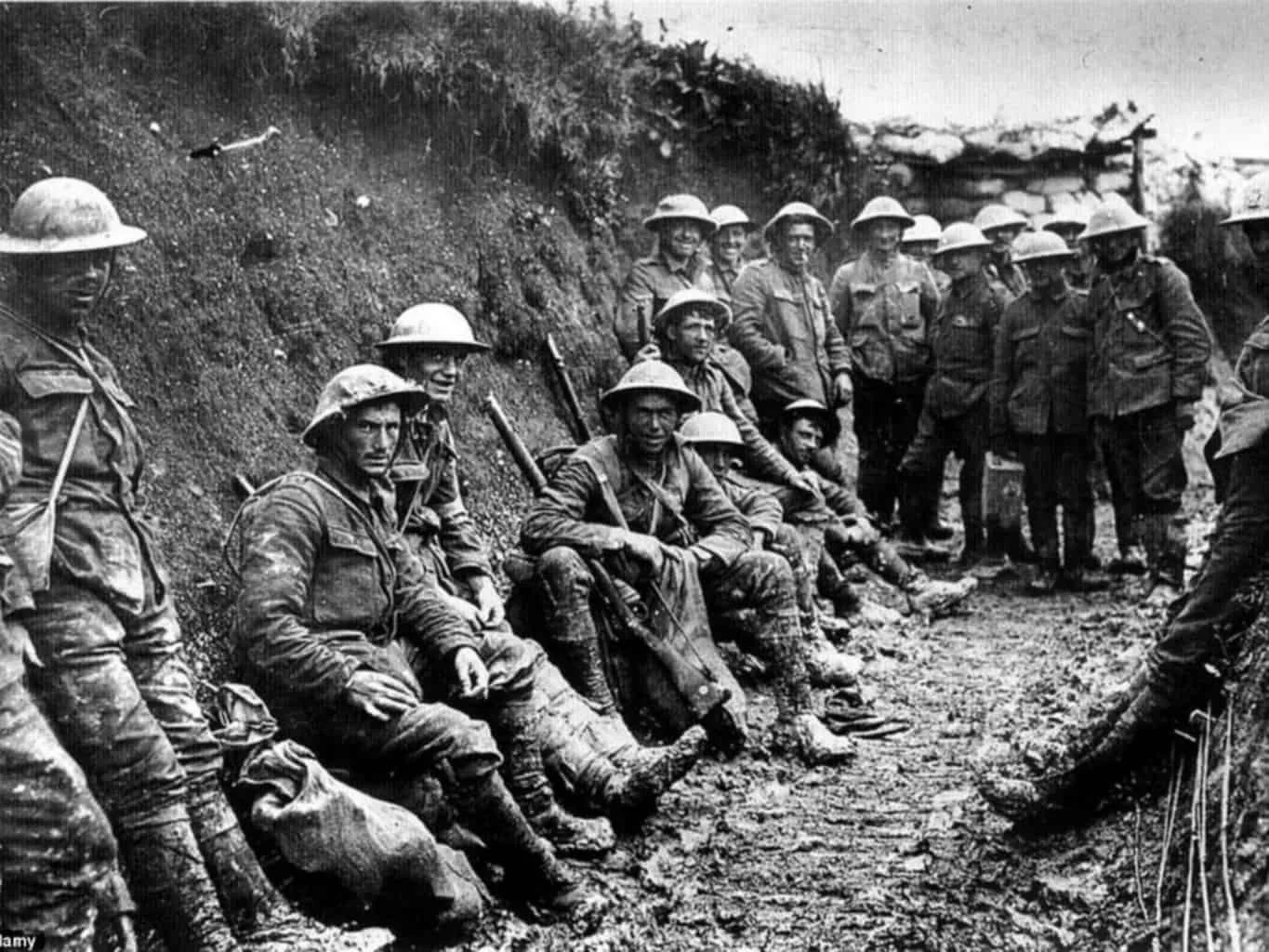
And, within hours, the men who’d sworn oaths to kill one another stood in the middle of the battlefield together. Singing songs, sharing drinks, and there is even a story of some small token gift exchanges between the warring parties. Eventually, they returned to their trenches, picked up their guns, and resumed the war. Of course, when word of this got to high command – those who sent these kids to fight and die – the decision makers, who would never fire a gun, they’d made it a crime to engage in informal treaties such as this. If this were to happen in the Christmas of 1915 – it’d be treason – and punishable by death.
So why does that story stick with me?
Because every December, when I think about what I’ve lost or gained, I think about those soldiers. I saw the tombstones in real life. They were teenagers, really. Kids in uniforms, freezing, terrified, homesick, standing knee-deep in mud they didn’t choose, fighting a war they didn’t start. And for one night, they remembered who they were before they were soldiers.
Their songs gave them thoughts of home. Fireplaces. Food. Family. It had to be weird – the person across the field who wants to kill you, knows all the lyrics, too.
And here’s the part that never leaves me: the most dangerous thing they did that night wasn’t stepping into No Man’s Land. Putting down the guns? That was the real risk. That was the real rebellion.
I’ve thought about that a lot – how often we’re told to keep our guards up, stay hardened, stay ready, stay armed for whatever might come. How vulnerability is treated like carelessness. Forgiveness is simply weakness.
But for one snowy night in 1914, for a little while, Christmas stopped a world war.
I think back to that 15-year-old kid in boat shoes, sliding down dusty hallways, coloring maps he didn’t understand, convinced none of it mattered. I couldn’t tell you where the Western Front was – but I know exactly where it is now.
It’s in the place where I used to work. In family members who haven’t spoken in years. It’s in cops who charge people with fictional crimes, as many as they can, just hoping one will stick. Just ask Karen Read. It’s in social media comments, fake news, and all the things that make you not want to leave your home.
Yet, every once in a while, someone starts singing.
An apology. A story. Not the sound of loading another round.
Most years, the shooting resumes. Life is relentless that way. But I refuse to believe those moments don’t matter because they don’t last. They matter because they happen at all.
I’ll hold that image again this year. Muddy boots, meeting in the middle. Rifles replaced with cups of trench-made moonshine. Sounds of singing instead of gunshots.
And I’ll remember that even in the most hostile places – especially there – if only for a moment that peace is possible right in the middle of a war.